
Editorial Introduction
Roblox Warden is built around cooperation, role selection, and completing dangerous missions as a group. With multiple creatures to unlock, the strongest choice is not always the creature with the biggest-looking numbers. The better question is whether its role fits your team and the mission you are about to play.
Editorial note: This original guide reorganizes the character-selection idea into a practical decision system rather than copying another site’s ranking. Because Roblox games can change through updates, treat the ranking as an editorial framework and re-check in-game descriptions after major patches.
How to Read This Tier List
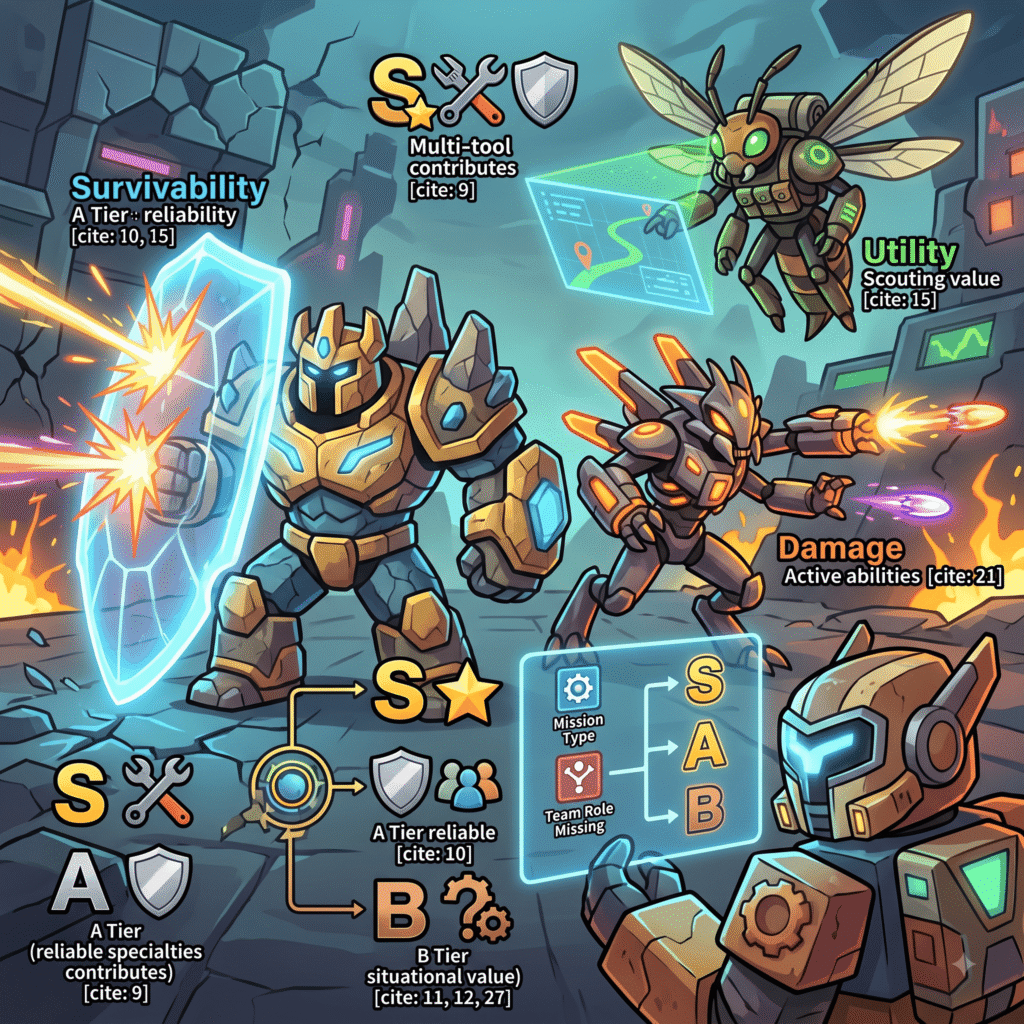
Use S tier for characters that consistently contribute across many missions and team compositions. A tier represents reliable choices that may have a narrower specialty. B tier is not a warning to avoid a character; it means you usually need a particular situation or teammate to get the most value. A tier list is most useful when it explains why a character belongs somewhere, not when it simply places names into colored boxes.
What Makes a Warden Character Strong?
A useful character should bring at least one meaningful advantage to a team: dependable damage, control, survivability, mobility, scouting value, or strong mission utility. I also recommend considering how easy the character is to use. A theoretically powerful kit can perform poorly when its timing is difficult or when it requires teammates to build around it.
S Tier: Characters Worth Prioritizing
The best candidates for an S-tier investment are characters that remain useful when the mission changes. A strong all-rounder can rescue a messy run, while a dependable specialist can dramatically shorten difficult encounters when the team knows how to use it. Prioritize characters whose strengths are active throughout a mission instead of abilities that only matter in one rare situation.
A Tier: Strong and Flexible Choices
A-tier choices are often the safest starting point for newer players. They can fill a clear role without demanding a perfect team composition. If an A-tier character matches the role your squad is missing, it can be a better pick than an S-tier character that duplicates another player’s job.
B Tier: Useful in the Right Situation
B-tier characters should not be treated as useless. They can shine in missions that reward their particular specialty, especially when a coordinated group can cover their weaknesses. Before replacing one, ask what problem the character solves and whether your current team actually has that problem.
How to Build a Balanced Team
Avoid building a squad entirely around damage. A balanced group should have a way to survive pressure, handle objectives, and recover when enemies disrupt the plan. If your team already has excellent damage, a utility-focused character may increase the group’s overall success more than another damage dealer.
Common Mistakes to Avoid
Do not choose solely from a tier label, copy another player’s loadout without understanding it, or spend resources before checking whether the character fits your preferred playstyle. Also remember that balance updates can change the value of abilities. Keep a small reserve of resources until you are confident that your favorite role remains effective.
Frequently Asked Questions
Is the highest tier always the best? No. Team composition and player skill matter. Should beginners use the easiest character first? Usually, yes, because learning mission flow is more valuable than forcing a complicated kit. Should you replace a lower-tier favorite? Not necessarily. If you consistently perform well with it and your team benefits from its role, keep using it.