Skyscraper Builder Timing Guide: Stack Straighter Floors and Recover from Bad Drops
A detailed Skyscraper Builder guide to swing timing, supporting each floor, correcting overhangs and learning from off-center drops.
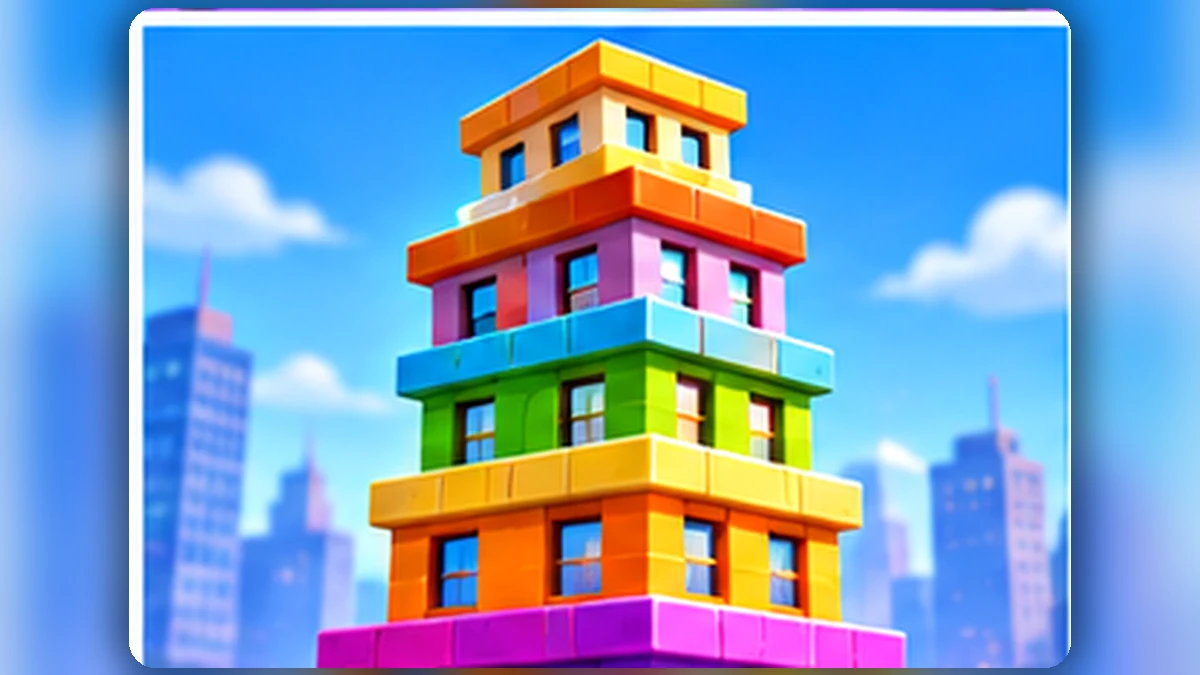
Table of Contents
- Understand the swinging-block challenge before trying to go higher
- How to play Skyscraper Builder step by step
- How to time a drop in Skyscraper Builder
- A worked example: early release versus late release
- Why tower blocks miss the stack
- Skyscraper Builder tower alignment tips for awkward positions
- Recovering from overhang without panicking
- How to stack floors straighter online
- Create a personal timing cue
- Why early floors matter more than they seem
- A small alignment experiment you can repeat
- Common beginner mistakes in Skyscraper Builder
- A five-session practice plan
- Playing Skyscraper Builder in a browser
- How this differs from construction simulation games
- Frequently asked questions
- What should I watch before releasing a floor?
- Why did the block land off-center even when it looked aligned?
- Is a bad drop the end of the run?
- How do I correct a right-side miss?
- Does a taller tower automatically mean a higher score?
- Does Skyscraper Builder require a download?
- Can I improve without playing for hours?
- Final thoughts: make every floor useful
A building section swings toward the tower you are constructing. For a moment, its edges seem lined up with the level below. You release it—and the section lands slightly off-center. The tower is still standing, but the next drop now feels more difficult. Did you release too early, or did you wait until the section had already passed its best position?
That is the central challenge of Skyscraper Builder on RobixGame. The game asks you to release swinging building sections over the existing stack. Its public game page emphasizes watching the swing, aligning the section with the support below, and keeping consistent overlap. Unlike a fast reflex game where any successful tap is enough, a tower builder makes the quality of each placement matter for the next one.
This guide focuses on how to recognize useful release moments, interpret a bad landing, and build a practice routine that improves your timing. It does not invent exact physics measurements, scoring multipliers, or power-ups that the game page does not confirm.
Understand the swinging-block challenge before trying to go higher
A section moving back and forth creates a timing problem. It does not stay in its ideal position while you decide. You must observe its motion, anticipate the next useful alignment, and release when the current section can land with enough support.
For players searching skyscraper builder swinging block guide, the biggest early insight is that the target is the existing top of your tower, not an abstract center point of the screen. If the tower has drifted slightly right over earlier drops, your next section should be aligned to the actual support below rather than to where the original base started.
This difference becomes more important as the building grows. A tiny error near the bottom may leave a noticeably uneven stack. When several placements lean in different directions, the reference you need is the current top layer. Keep reassessing it instead of tapping mechanically at the same screen position.
How to play Skyscraper Builder step by step
Start with a calm first attempt:
- Open the Skyscraper Builder game page and select Start Game.
- Watch the hanging section cross the area above the existing tower.
- Identify the horizontal position where the new section appears closest to aligned with the top below.
- Release using the control shown by the game while observing the section's motion.
- Watch where it actually lands; compare the left and right edges with the support below.
- Before the next release, update your target to the new top layer rather than assuming the original center is unchanged.
- When you make a poor drop, use its direction as information for the next attempt.
- Continue building while prioritizing reliable overlap rather than rushed releases.
The controls and failure conditions should be checked inside the active game. Do not assume the exact keyboard key, number of chances, or reward system based on similarly named mobile tower titles.
How to time a drop in Skyscraper Builder
The search how to time a drop in skyscraper builder is really a question about visual reference points. Select an edge of the hanging section and compare it with the corresponding edge of the topmost floor. As the section approaches, watch the gap shrink. Release around the alignment you can consistently recognize, not simply when the piece looks close in a general sense.
It can help to choose one edge rather than trying to monitor four corners simultaneously. If the left edges are easy to see, focus there for a few attempts. Once you understand the motion, switch attention to the overall overlap to avoid solving one edge while leaving the other badly misaligned.
Movement and drop delay can complicate your intuition. The game page notes that the section retains its position and motion as it drops, so the place where you release can influence the landing. This means a visually perfect overlap at the exact instant you tap may not always be the best cue if the motion continues during descent. Observe the result and calibrate your personal timing accordingly.
A worked example: early release versus late release
Imagine the section is traveling left to right. You choose a release point as its center reaches the left edge of the existing tower. The piece lands with too much overhang on the right. On another attempt, you release slightly earlier along the same travel direction, and the placement is more centered. This suggests your previous timing allowed too much continued motion before landing.
Now imagine the opposite result: the section consistently falls short on the left. A small delay might improve alignment. The exact relationship depends on the current motion and game physics, so this is a method for testing a timing change, not a guaranteed rule about all levels.
A useful record is simply “too far left,” “too far right,” or “close.” That is enough to guide your next experiment. You do not need frame-by-frame tools or technical measurements to learn from a few trials.
Why tower blocks miss the stack
If you search why tower blocks miss the stack, consider several possible causes before deciding the game is unpredictable. You may have released at the wrong point in the swing. You might have aimed at the original center rather than the shifted top. You may have reacted to the visual position without allowing for movement during the drop. Or the remaining support may have become narrow enough that small errors now matter more.
These possibilities should lead to different corrections. If the problem is a shifted tower, change your target. If you consistently land too far in one direction, adjust your release timing in small increments. If the tower is already very uneven, concentrate on finding reliable overlap on the next floor instead of chasing a perfect-looking overall silhouette.
The goal is not to invent excuses for missed drops. It is to turn a failed placement into an explanation that improves the following attempt.
Skyscraper Builder tower alignment tips for awkward positions
A strong skyscraper builder tower alignment tips routine begins before the next piece arrives. Locate the usable top surface. Notice whether its left and right edges are equally exposed. Choose one visual landmark to follow as the section swings toward the target.
If the tower is leaning right, resist automatically moving every new section farther right. Your job is to place the next section well on the actual support, not to amplify the earlier offset. A near-centered placement can make the next step easier to judge because the visible edges are clearer.
In games that reduce usable area after imperfect overlap, early precision becomes especially valuable. That reduction is common in the wider genre, but the exact trimming behavior must be checked in the running version. The RobixGame page confirms that consistent overlap provides more support; it does not publish a fixed percentage lost after a miss.
Recovering from overhang without panicking
The phrase skyscraper builder overhang recovery suggests an important change in mindset. After an imperfect drop, do not spend the next attempt trying to restore the entire tower to its original position with one dramatic correction. A fresh extreme overhang could make the problem worse.
Instead, use the visible surface of the last accepted floor as your new target. Your next objective is a clean overlap on that support. If the game continues after a slight misalignment, treat it as an opportunity to stabilize the stack. If the game ends, identify whether the section missed the supported area or failed another rule shown on the screen.
A run with one imperfect floor can still be useful practice. The recovery decision teaches you to adapt, which is more valuable than memorizing an ideal rhythm that only works while every earlier placement is perfect.
How to stack floors straighter online
If your goal is how to stack floors straighter online, work with a repeatable release process rather than random tapping. Watch a full swing before your first serious attempt. Pick a point where the new section passes directly over the previous floor. Observe the motion, make one release, and compare the landing with the target.
Now choose one correction. If you landed too far right, try releasing a little earlier on a comparable left-to-right approach. If you landed too far left, test a small delay. Compare outcomes before changing direction again. You should learn how the movement behaves rather than pressing on instinct alone.
The idea is similar to throwing at a target: consistency comes from using a stable reference and modifying one factor at a time. The game is entertainment, not a construction simulator, but it rewards the same basic habit of measuring a result before changing your approach.
Create a personal timing cue
Some players prefer a visual cue: release when two edges nearly align. Others find rhythm easier: watch one complete pass, then anticipate the next. Neither method is universally superior. The best method is the one that produces repeatable placement for you on the device you are using.
If the swing seems faster later in a run, do not assume the rate changes at an exact floor number unless the game says so. Simply notice whether your usual cue is becoming less reliable. A faster-looking movement may require greater attention to the reference point and smaller timing adjustments.
For a skyscraper builder game timing practice session, repeat a short set of attempts where you judge only the first few placements. Improving early accuracy often builds more confidence than repeatedly pushing through a long run with an unstable foundation.
Why early floors matter more than they seem
The first few sections establish the tower you will be using as a target. If early placements are awkward, the errors become part of every later visual decision. A clean start makes subsequent references easier to read, even without knowing whether the game has any hidden stability calculation.
Treat the opening as a chance to practice fundamentals. On the first floor, identify the center. On the second, check whether the support shifted. On the third, maintain alignment with the new top. This habit scales naturally into later stages.
That is also why patience helps more than an aggressive approach to speed. Releasing as soon as a section appears may produce a quick series of floors, but it does not teach you whether your placements are improving.
A small alignment experiment you can repeat
Imagine your first three landings are recorded as follows: first floor, slight right offset; second floor, moderate right offset; third floor, near center. You may be tempted to call the last attempt lucky. A better approach is to recall which edge you watched, what direction the section was traveling, and whether you changed release timing.
Try reproducing that method on another attempt. You are comparing a technique, not memorizing a particular frame. When the pattern repeats, you have found something useful. If it does not, look at whether the incoming motion, tower position, or your attention changed.
A short paper note can be surprisingly helpful: “watch left edge, wait one beat, check actual top.” Such notes make a free swinging tower building game online session more instructive without turning it into serious homework.
Common beginner mistakes in Skyscraper Builder
The first skyscraper builder beginner mistakes problem is watching only the moving section and ignoring the tower below. The second is aiming at the screen center after earlier drops have changed the effective support. The third is overcorrecting a near miss, when a small change could have been enough.
A fourth mistake is changing several things simultaneously. If you switch your reference edge, timing, and preferred swing direction all at once, you will not know which adjustment helped. A fifth is chasing a score before understanding the movement. A good attempt should give you a clearer sense of what happened, even if the building does not reach a remarkable height.
Finally, avoid transferring specific promises from other stacking games. Some have streak bonuses, wider blocks, or lives; those are not confirmed as Skyscraper Builder features on its current game page. What is confirmed is the swinging drop and the need for consistent overlap.
A five-session practice plan
Session one: observation. Watch the incoming swing and recognize where the new piece appears above the support. Make several releases without worrying about total height.
Session two: reference point. Choose one edge to follow and compare each landing to the top layer. Stop using the original center as a target after the tower shifts.
Session three: small correction. When a section lands off-center, describe its direction and adjust the next comparable release slightly. Practice resisting dramatic changes.
Session four: recovery. Continue after a mild misalignment if the game allows it. Focus on making the next placement reliable rather than undoing the visual tilt in one step.
Session five: complete run. Combine observation, alignment, correction, and recovery. At the end, identify one recurring cause of your imperfect drops. Use that insight in the next round.
This plan works because it gives each attempt a purpose. Instead of wondering why a tower sometimes grows higher, you can name the decision you are improving.
Playing Skyscraper Builder in a browser
Players who want to play skyscraper builder in browser can use its RobixGame page. The website supplies Start Game, Restart and Fullscreen controls. Fullscreen may help when the alignment target is small, and the game page identifies Esc as the way back from fullscreen.
Device compatibility and the exact input for releasing a section should be confirmed in the game. A responsive webpage does not guarantee identical keyboard and touch behavior. If an action seems unresponsive, check that the game area is active and that you are using the displayed control before trying a different browser.
The browser version generally avoids traditional app installation, but it still loads resources and may need an internet connection. Do not infer offline play from the ability to open the page.
How this differs from construction simulation games
Skyscraper Builder is an arcade timing challenge. It is not teaching real structural engineering, building codes, or construction safety. The important mechanic is making an accurate drop from a swinging position; real buildings require entirely different technical planning and professional judgment.
This distinction matters for search intent. Someone looking for an engineering sandbox may want a simulation with materials and stress calculations. Someone looking for a short precision challenge will likely prefer an arcade stacker. Understanding the difference helps you choose a game you will actually enjoy.
Frequently asked questions
What should I watch before releasing a floor?
Watch the swinging section in relation to the current top of the tower. A recognizable edge or center alignment can serve as a timing cue.
Why did the block land off-center even when it looked aligned?
The section retains its movement as it falls. Your release position and motion together influence the landing, so a slight timing adjustment may be needed.
Is a bad drop the end of the run?
That depends on the game state and its rules. The website describes the importance of overlap but does not provide a universal number of allowed mistakes.
How do I correct a right-side miss?
Compare the direction of travel and try a small timing adjustment during the next comparable movement. Do not assume the same change works on every swing direction.
Does a taller tower automatically mean a higher score?
The public description focuses on stacking sections. Check the in-game score display rather than assuming a specific points formula.
Does Skyscraper Builder require a download?
The linked game is accessible on a RobixGame browser page. The browser still loads game files, and offline support is not guaranteed.
Can I improve without playing for hours?
Yes. Short focused attempts can teach you how timing and target alignment affect your landings. Consistent attention may be more useful than repeated rushed runs.
Final thoughts: make every floor useful
Skyscraper Builder is most rewarding when each attempt leaves you with a clearer sense of timing. Watch the swing, compare the moving section with the real support below, release deliberately, and interpret the landing. A slightly imperfect floor is not necessarily a reason to panic; it is information for the next move.
If you want to practice the method described here, play Skyscraper Builder on RobixGame and concentrate first on three neatly supported sections. Build from there rather than rushing for the top of the screen.