2048 Online: Keep Big Tiles Together and Avoid Dead Ends
Learn how to avoid splitting the two highest tiles across the board with clear explanations for 2048.
Read article ↗
Build larger numbers by sliding equal tiles together in 2048, a board puzzle where empty space matters as much as the score.
Play here in the browser.
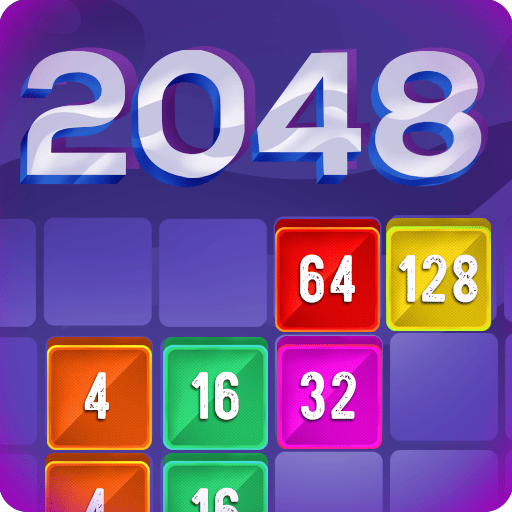 2048
Each swipe moves the whole board, so a promising merge can also shift a tile you wanted to keep still. Choose a corner for your largest value and leave a route for smaller numbers to reach it.
In this version of 2048, the main challenge is managing a shared board rather than moving one chosen tile. A swipe changes the positions of several numbers together. Two equal values can combine, but the same movement can also close a gap or pull a useful tile away from the position you were protecting. Before swiping, follow the whole row or column in the intended direction. This makes it easier to see both the merge you want and the rearrangement that comes with it.
Give your largest tile a consistent home. A corner can work well because it leaves fewer directions from which the surrounding arrangement can change. Build a loose order around that corner, with larger numbers near one another and smaller values feeding into the available space. This is a planning habit rather than a guaranteed winning pattern. When the board changes unexpectedly, preserving a route for the next merge matters more than keeping an attractive arrangement at any cost.
Empty cells provide room to repair a crowded position. If you can choose between an immediate merge and a move that opens a useful lane, compare the following turn before deciding. A larger number is not automatically the stronger result when it leaves several smaller tiles stranded. Look for pairs that can be brought together without forcing an awkward movement of the largest values. On a busy board, clearing one workable path may be more useful than chasing a distant combination.
The playable board here supports swipe movement, and combining equal tiles increases the score. Use the first few moves to learn how the board reacts to your chosen direction, especially on a small screen. Once you understand that response, slow down when space becomes limited. There is no need to treat every available swipe as progress: compare where the tiles will finish, identify the next pair you can realistically connect, and make the move that leaves another sensible decision afterward. The aim is to develop a board you can continue using, not simply to create one impressive tile and lose the space around it.
No. A swipe moves the board's tiles in a direction, so inspect the other affected rows or columns before choosing it.
Matching values can merge. For example, two 2 tiles combine into a 4 tile when a valid movement brings them together.
A stable corner gives you a reference point for arranging the other numbers. It is a useful strategy, not a rule enforced by the game.
Consider the resulting space as well. A merge that traps smaller tiles may leave a weaker position than a move that prepares a clear lane.
Find reachable equal pairs and check which movement creates room without scattering the large values you have already organised.
Found a control that behaves differently? Tell us the game name and your device.














Learn how to avoid splitting the two highest tiles across the board with clear explanations for 2048.
Read article ↗
Improve Cross Runner with practical bridge alignment, hazard timing, landing checks and smarter coin and key collection routes.
Read article ↗
Understand camera rotation, layer turns, centers, edges and corners in Cube 3D. Learn reversible moves and plan a standard 3×3 solve step by step.
Read article ↗
Learn the leaf traversal rules, plan flower-planting routes and use Undo to recover from awkward moves in Emoji Puzzle on RobixGame.
Read article ↗