
Cross Runner: Master Narrow Bridges, Jump Landings and Obstacle Timing
Improve Cross Runner with practical bridge alignment, hazard timing, landing checks and smarter coin and key collection routes.
Read article ↗
Time a ninja's leaps through Fight Ninja's hazard route and make sure each jump has somewhere clear to land.
Play here in the browser.
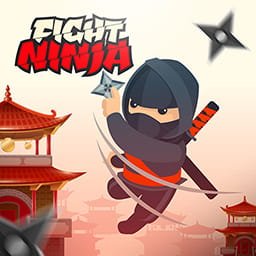 Fight Ninja
Read the space beyond an obstacle before leaving the ground. Clearing the nearest danger is not enough when a second hazard sits exactly where the ninja is about to touch down.
A jump can clear the front of a hazard and still leave the ninja above a crowded landing. Look at where the ground opens again to see how much room the next move will have.
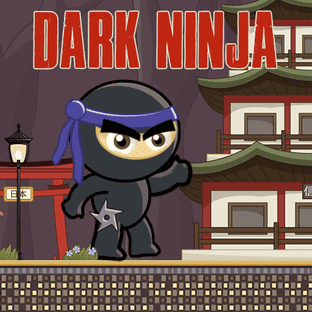
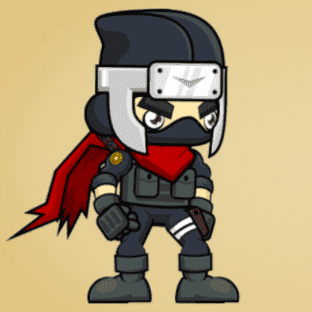
Fight Ninja follows a ninja through a platform hazard course, with jumping and landing at the centre of the action. The character's running, crouching, airborne and falling poses make the movement easy to notice, but the ground ahead deserves equal attention. An obstacle is only safely passed when the ninja reaches usable ground on the other side. Before making the next input, connect the visible hazard with the space where the jump is likely to end.
Use the first stretch to judge the response of the jump control. Look at the ninja's position when the leap begins, then follow the feet through the landing. That produces a practical sense of distance without requiring a guessed count or a fixed rhythm. If you launch too close to a hazard, the useful correction concerns the takeoff point. If you clear it but arrive in another danger, the correction concerns the whole route. Those are different problems, and noticing the difference makes a repeated attempt more informative.
Several pieces of ground can share the screen while only one is a safe next landing. Read the near edge, the surface itself and the far edge before treating a platform as a destination. The ninja's animation can also tell you when a jump has become a fall, which is a good moment to shift your attention toward whatever ground remains below. Avoid repeated inputs made only because the character is airborne. An intentional action linked to a visible surface is easier to understand than several presses whose effects are unclear.
The game's compact presentation keeps the focus on movement rather than a long menu of actions. Watch the click or touch cue at the start and use the replay control when an attempt finishes. On the next run, choose one difficult transition to improve: leaving the ground earlier, waiting for a clearer landing, or keeping the following obstacle in view. This makes progress something you can explain from the course itself. Fight Ninja becomes more readable as you connect each jump to its landing, then carry that successful landing into the next decision without losing sight of the hazard beyond it.
It is a ninja platform hazard course focused on timing leaps and reaching clear ground.
The jump may end beside or inside the following hazard, so inspect the landing as well as the obstacle.
It signals that attention should shift toward the ground below and the remaining landing space.
Choose one specific transition and change its takeoff timing or landing plan deliberately.
Found a control that behaves differently? Tell us the game name and your device.






Improve Cross Runner with practical bridge alignment, hazard timing, landing checks and smarter coin and key collection routes.
Read article ↗
Understand camera rotation, layer turns, centers, edges and corners in Cube 3D. Learn reversible moves and plan a standard 3×3 solve step by step.
Read article ↗
Learn the leaf traversal rules, plan flower-planting routes and use Undo to recover from awkward moves in Emoji Puzzle on RobixGame.
Read article ↗
Find exposed matches, clear rising rows and stay below the red line in Pet Merge on RobixGame. Includes a browser check, worked examples and a practi…
Read article ↗