
Cross Runner: Master Narrow Bridges, Jump Landings and Obstacle Timing
Improve Cross Runner with practical bridge alignment, hazard timing, landing checks and smarter coin and key collection routes.
Read article ↗
Guide a bean contestant through three-dimensional obstacle rounds and work toward qualification.
Play here in the browser.
 Beans Stumble 3D
Read the current obstacle, use the movement and jump controls deliberately, and check the round's qualification or elimination feedback.
The round prompt tells you whether to race, stay clear of hazards or go to a matching icon. Other contestants can head for the same area, so the space where you will land matters even when the objective is clear.
Beans Stumble 3D puts a bean-shaped contestant into obstacle-based party rounds. Other contestants share the course, while the layout provides barriers, raised surfaces and moving hazards to negotiate. The first useful decision is to read the current round rather than follow the nearest character automatically. A crowd can indicate where others are going, but it does not guarantee that their route is open or that they have timed the next obstacle well.
Movement and jumping have separate roles, with a directional pad and jump control available in the game. Establish a comfortable response before trying to cross a crowded hazard. The character's apparent height in the three-dimensional view can make a landing harder to judge than it would be on a flat board. Look for the platform surface itself and keep enough room to settle after a jump. Clearing the front edge of an obstacle is not enough if the landing carries the bean into the next one.
The installed rounds use qualification and elimination feedback. A countdown introduces play, and the result tells you whether the contestant continues. Pay attention to that feedback rather than assuming that reaching a busy area means you have finished the requirement. Axes, cylinders and walls appear among the obstacle arrangements, so study the particular motion or opening ahead of you. A pause in a safe place can give you a clearer crossing than joining a collision simply because the crowd is moving.
When an attempt goes wrong, separate directional control from obstacle timing. If the bean went where you intended but met a moving barrier, change the departure time. If it missed the surface entirely, reconsider the direction and jump preparation. Checkpoints and finish markers help define progress on the course, but the useful focus is always the next secure part of the round. Make your next movement lead somewhere you can understand and recover, then use that position to prepare the following action.
Yes. Its movement controls and jump action are separate.
Watch the round's qualification or elimination result.
Check the obstacle yourself first; a crowd can enter an unsafe crossing together.
If the landing route was correct but a moving hazard blocked it, adjust timing. If you missed the surface, review direction and jump preparation.
Found a control that behaves differently? Tell us the game name and your device.

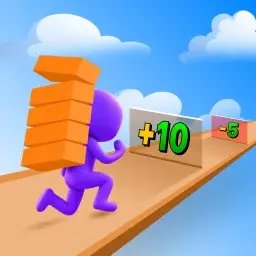





Improve Cross Runner with practical bridge alignment, hazard timing, landing checks and smarter coin and key collection routes.
Read article ↗
Understand camera rotation, layer turns, centers, edges and corners in Cube 3D. Learn reversible moves and plan a standard 3×3 solve step by step.
Read article ↗
Learn the leaf traversal rules, plan flower-planting routes and use Undo to recover from awkward moves in Emoji Puzzle on RobixGame.
Read article ↗
Find exposed matches, clear rising rows and stay below the red line in Pet Merge on RobixGame. Includes a browser check, worked examples and a practi…
Read article ↗