Cross Runner: Master Narrow Bridges, Jump Landings and Obstacle Timing
Improve Cross Runner with practical bridge alignment, hazard timing, landing checks and smarter coin and key collection routes.
Read article ↗
Drop a squirrel through Going Nuts' obstacle board, choosing a release point that can collect acorns and useful points.
Play here in the browser.
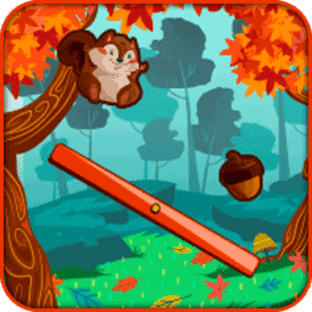 Going Nuts
Trace a likely fall before letting go, including the objects that may deflect the squirrel. A route through several reachable rewards is more promising than lining up over one attractive item with little beneath it.
The squirrel can move sideways before release, but the pegs shape its path once it falls. A drop above one acorn may bounce toward another part of the board, making the first contact useful to watch.
Going Nuts asks you to release a squirrel through an obstacle board containing acorns and baskets. The drop begins from a position you choose, so the main decision happens before the squirrel starts falling. Inspect the whole board rather than selecting a point directly above the first attractive acorn. A useful release should account for the obstacles that can deflect the fall and the receiving area waiting below.
Trace several possible descents before committing. A route may look direct until a sloped or rounded object sends the squirrel sideways. Consider that contact as part of the plan instead of treating every deflection as an unexpected failure. Compare the route through reachable acorns with the position of the baskets and their visible values. One item near the top is not necessarily a strong choice when there is little useful support or reward beneath it. Think about the complete journey from release to landing.
After the drop, watch where the squirrel actually touches the board. Those contacts explain why the chosen starting position produced its result. If the fall passes a desired acorn on one side, a small horizontal adjustment may be worth testing. If an early obstacle changes the direction completely, focus on that first collision before worrying about the bottom of the board. Changing one feature of the release makes successive attempts easier to compare than moving from one edge to the other without observing the intermediate route.
The level and result screens provide a way to follow progress, but the next board still deserves a fresh inspection. Do not assume a release position from an earlier stage will remain useful when the obstacles and receiving areas move. On a phone, keep the intended drop point visible and let the board settle before judging the result. A successful approach combines observation with a controlled experiment: choose a plausible descent, release the squirrel, follow its contacts and use the outcome to refine the next decision. That routine makes the acorn collection and basket landing part of one understandable path rather than two unrelated hopes.
Choose the squirrel's release position after inspecting the obstacles, acorns and baskets below.
Contacts with the board's obstacles can deflect the descent, so include those surfaces in your plan.
Consider the rest of the fall and the receiving basket as well. A nearby reward can lead into an unhelpful lower route.
Identify the earliest important contact and make a modest starting-position adjustment based on that observation.
Found a control that behaves differently? Tell us the game name and your device.







Improve Cross Runner with practical bridge alignment, hazard timing, landing checks and smarter coin and key collection routes.
Read article ↗
Understand camera rotation, layer turns, centers, edges and corners in Cube 3D. Learn reversible moves and plan a standard 3×3 solve step by step.
Read article ↗
Learn the leaf traversal rules, plan flower-planting routes and use Undo to recover from awkward moves in Emoji Puzzle on RobixGame.
Read article ↗
Find exposed matches, clear rising rows and stay below the red line in Pet Merge on RobixGame. Includes a browser check, worked examples and a practi…
Read article ↗