
Cross Runner: Master Narrow Bridges, Jump Landings and Obstacle Timing
Improve Cross Runner with practical bridge alignment, hazard timing, landing checks and smarter coin and key collection routes.
Read article ↗
Crossy Traffic asks an animal to cross busy lanes by finding gaps that last long enough for the whole move.
Play here in the browser.
 Crossy Traffic
Watch more than the nearest lane. Reaching its far side is only useful if the next position is safe, so compare approaching vehicles before stepping out of a comfortable waiting spot.
The next lane can be moving in a different direction from the lane you just crossed. Check where the following car is coming from so you know whether a gap will stay open through the whole step.
Crossy Traffic places an animal beside a route made from moving traffic, tracks and stretches of water. A tap begins the crossing, and further inputs advance the character through the scene. The first practical task is to recognise where you can pause and where you must complete the next movement. A quiet patch of ground is a planning position; an occupied road lane is a different problem. Before leaving safety, look at both the nearest hazard and the space where the following move would finish.
Traffic direction matters as much as distance. A vehicle that appears far away can still reach your crossing line while you are moving. Compare its approach with the opening you intend to use and avoid judging a lane from a single glance. After one successful step, inspect the next lane again. The timing that worked for the previous car does not automatically describe the next vehicle or a train approaching a track. Make each advance answer a visible gap rather than tapping simply because the last movement was successful.
Water sections add another kind of route reading. The game includes logs alongside its river areas, so pay attention to available support instead of treating every empty-looking patch as usable ground. A route should lead somewhere you can continue from. If the next landing would leave the character facing an immediate obstruction, consider waiting for a more workable opening. Coins provide an extra reason to inspect the route, but a detour should still have a safe arrival and departure rather than being chosen solely because the reward is visible.
Score and top-score information let you compare runs, while the retry flow brings you back for another crossing. Use a failed attempt to identify the type of judgement that broke down: a vehicle arrived sooner than expected, the next lane was not checked or an unsupported section was mistaken for a safe landing. On a phone, keep the forward route visible around your finger. A deliberate series of inputs can still be quick, but each movement should follow a new reading of the scene. Progress comes from combining the timing of the current crossing with an understanding of the place you will occupy afterward.
Its route also includes trains, tracks, rivers and logs. Read the type of section before advancing.
A tap starts the crossing; further movement inputs advance the animal through the route.
A safe first step can still leave the character without a usable continuation. Check the next landing as well as the immediate gap.
Look for the available support, including logs, rather than assuming that an empty-looking water area is safe ground.
Found a control that behaves differently? Tell us the game name and your device.
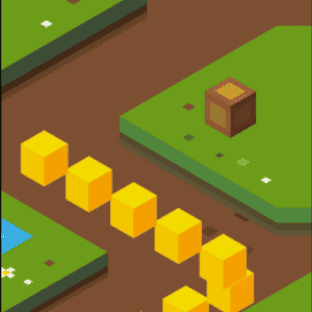












Improve Cross Runner with practical bridge alignment, hazard timing, landing checks and smarter coin and key collection routes.
Read article ↗
Understand camera rotation, layer turns, centers, edges and corners in Cube 3D. Learn reversible moves and plan a standard 3×3 solve step by step.
Read article ↗
Learn the leaf traversal rules, plan flower-planting routes and use Undo to recover from awkward moves in Emoji Puzzle on RobixGame.
Read article ↗
Find exposed matches, clear rising rows and stay below the red line in Pet Merge on RobixGame. Includes a browser check, worked examples and a practi…
Read article ↗