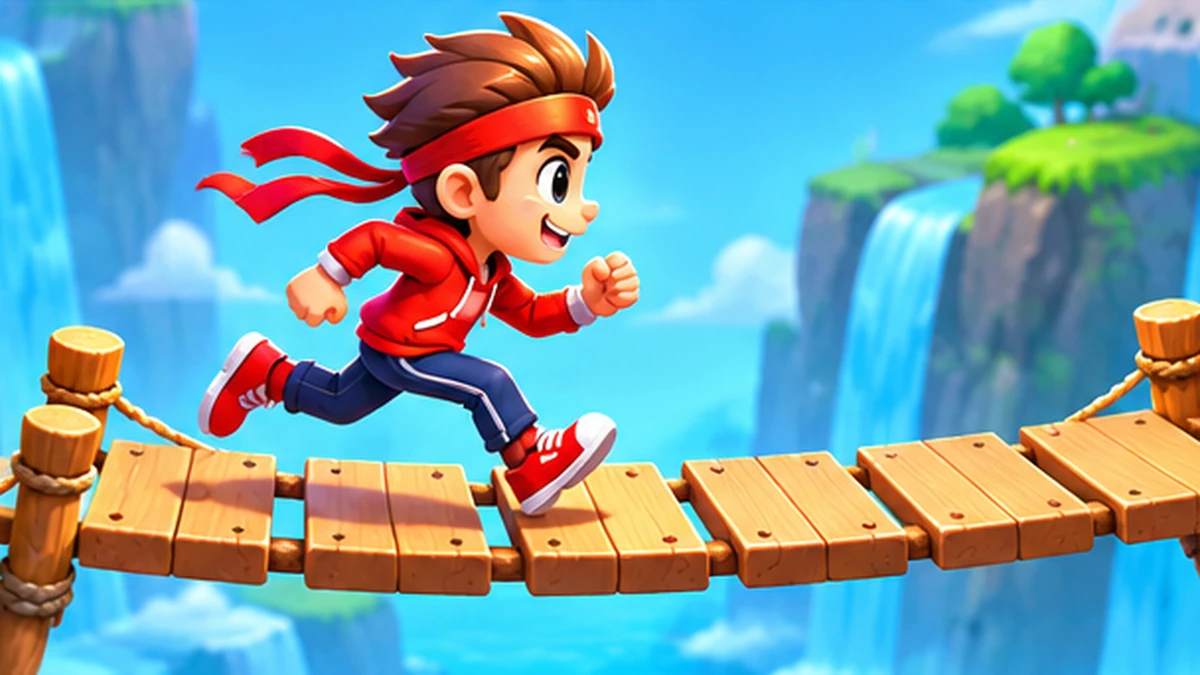
Cross Runner: Master Narrow Bridges, Jump Landings and Obstacle Timing
Improve Cross Runner with practical bridge alignment, hazard timing, landing checks and smarter coin and key collection routes.
Read article ↗
React to a spooky landscape in Scary Run, where gaps and obstacles interrupt the runner's forward escape.
Play here in the browser.
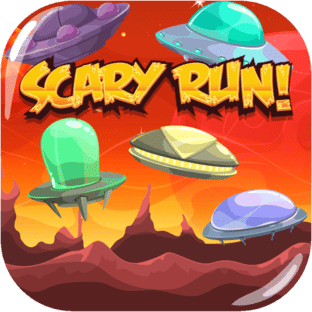 Scary Run
Watch how much space remains after a jump. Landing safely is not the end of the decision if the following obstacle is already close, so prepare for the sequence rather than an isolated hazard.
Gaps and raised hazards test different parts of a jump. A gap needs the character to travel far enough, while a raised obstacle also needs enough height before the runner reaches its front edge.
Scary Run sends its character through a spooky scene with enemies, stones, coins and other hazards. Running and jumping action takes place alongside score information and movement cues. Begin by locating the runner and the nearest usable ground. The frightening presentation supplies atmosphere, but the immediate question is practical: where can the character move next without meeting an obstacle or arriving at an unsafe landing? That question gives the first action a clear purpose.
Inspect the space after a jump before leaving the ground. Clearing the nearest hazard may still place the runner beside the next one. Treat the passage as approach, action and recovery rather than an isolated leap. When objects sit close together, decide which controls take-off and which determines the landing. A repeated rhythm can stop fitting as the spacing changes, so let the current arrangement guide each movement.
Coins add a choice within the escape. A pickup can belong to a safe passage, but should not automatically draw attention away from an enemy. Inspect the ground beyond the reward and judge whether the character can continue from there. Read the score during a clear moment, then return to the approaching route. The number records progress; the visible ground provides the information needed to preserve it.
On a phone, keep controls reachable without hiding the course around your fingers. Follow this edition's actual action cue rather than assuming controls from another horror runner apply. After a failed attempt, choose one decision to improve: acting late, overlooking the landing or chasing a coin into a difficult gap. A restart is useful when it tests that observation. Consistency requires a repeatable habit of locating the runner, reading the danger and choosing a finish position with room for another action. When several threats share the scene, return to those references before committing. You can then respond to the route itself instead of making movements only because the surrounding action looks busy.
Identify the hazard controlling take-off and the feature determining the landing.
When reaching it leaves an unsafe landing or carries the runner toward an enemy.
Hazard spacing can change, making a repeated beat unsuitable for the next passage.
Relocate the character, inspect the nearest danger and choose a manageable finish position.
Found a control that behaves differently? Tell us the game name and your device.






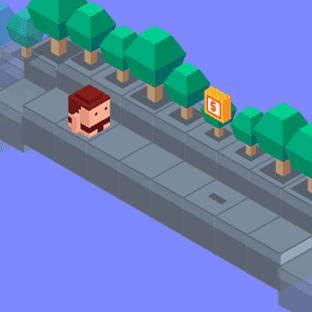


Improve Cross Runner with practical bridge alignment, hazard timing, landing checks and smarter coin and key collection routes.
Read article ↗
Understand camera rotation, layer turns, centers, edges and corners in Cube 3D. Learn reversible moves and plan a standard 3×3 solve step by step.
Read article ↗
Learn the leaf traversal rules, plan flower-planting routes and use Undo to recover from awkward moves in Emoji Puzzle on RobixGame.
Read article ↗
Find exposed matches, clear rising rows and stay below the red line in Pet Merge on RobixGame. Includes a browser check, worked examples and a practi…
Read article ↗