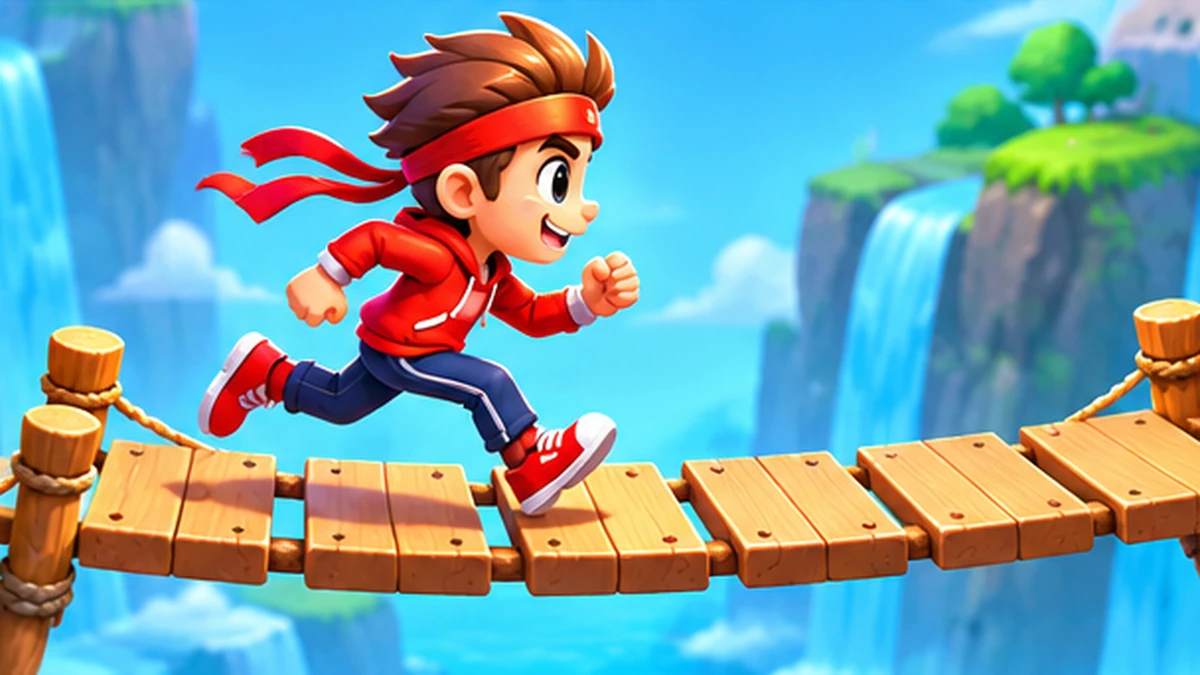
Cross Runner: Master Narrow Bridges, Jump Landings and Obstacle Timing
Improve Cross Runner with practical bridge alignment, hazard timing, landing checks and smarter coin and key collection routes.
Read article ↗
Guide a ball toward a hole in Galaxy Hole, reading the space-themed route before committing to the next movement.
Play here in the browser.
 Galaxy Hole
Study the obstacles nearest the ball first and decide where it can safely stop or pass. A direct line toward the destination is not always a usable line through the intervening layout.
A route can look direct from the start while a barrier makes the last part difficult. Checking where the ball stops after a small adjustment gives you a useful reference when it is already close to the hole.
Galaxy Hole asks you to guide a ball through a compact obstacle arrangement toward a hole. The destination may be easy to spot while the usable path is much less obvious. Look at the whole space between the ball and the target before acting. A straight connection on the screen can still be interrupted by a wall, a moving piece or a dangerous edge. The useful route is the one the ball can actually travel, not simply the shortest line you can imagine.
The game presents its interaction through hold-and-release cues and a visible directional guide. Use that guide to compare the intended movement with the first part of the route. A large adjustment is not always helpful in a confined layout, because it can carry the ball beyond the position where you need control. Pay attention to what the ball does after contact with a surface. The direction after a bounce can matter as much as the initial direction toward the obstacle.
Different arrangements introduce moving and rotating obstacles as well as sharply defined hazards. Read their motion before releasing the ball. An opening that exists for a moment may close before the ball reaches it, so consider the travel time as well as the starting gap. If a surface changes the ball's course, follow the resulting route with your eyes rather than preparing the next input immediately. Waiting long enough to understand the result can reveal whether the difficulty lies in direction, timing or an unexpected collision.
The level structure allows you to work on one small problem at a time. A failed attempt is useful when it answers a particular question: whether the ball can fit past a panel, whether a rebound clears a hazard or when a moving opening becomes usable. Change the relevant part of your next attempt instead of making a completely different guess. Collectibles and visual variations add interest, but reaching the hole remains the clearest way to judge whether your chosen route solves the current arrangement.
Guide the ball through the current obstacle arrangement to the hole.
Compare it with the first wall, opening or hazard before releasing the movement.
The panel's position can change before the ball arrives, so the timing of the release matters too.
Change the part that caused the failure, such as the initial direction or the timing around an opening.
Found a control that behaves differently? Tell us the game name and your device.
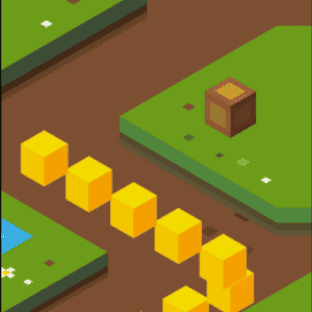

Improve Cross Runner with practical bridge alignment, hazard timing, landing checks and smarter coin and key collection routes.
Read article ↗
Understand camera rotation, layer turns, centers, edges and corners in Cube 3D. Learn reversible moves and plan a standard 3×3 solve step by step.
Read article ↗
Learn the leaf traversal rules, plan flower-planting routes and use Undo to recover from awkward moves in Emoji Puzzle on RobixGame.
Read article ↗
Find exposed matches, clear rising rows and stay below the red line in Pet Merge on RobixGame. Includes a browser check, worked examples and a practi…
Read article ↗