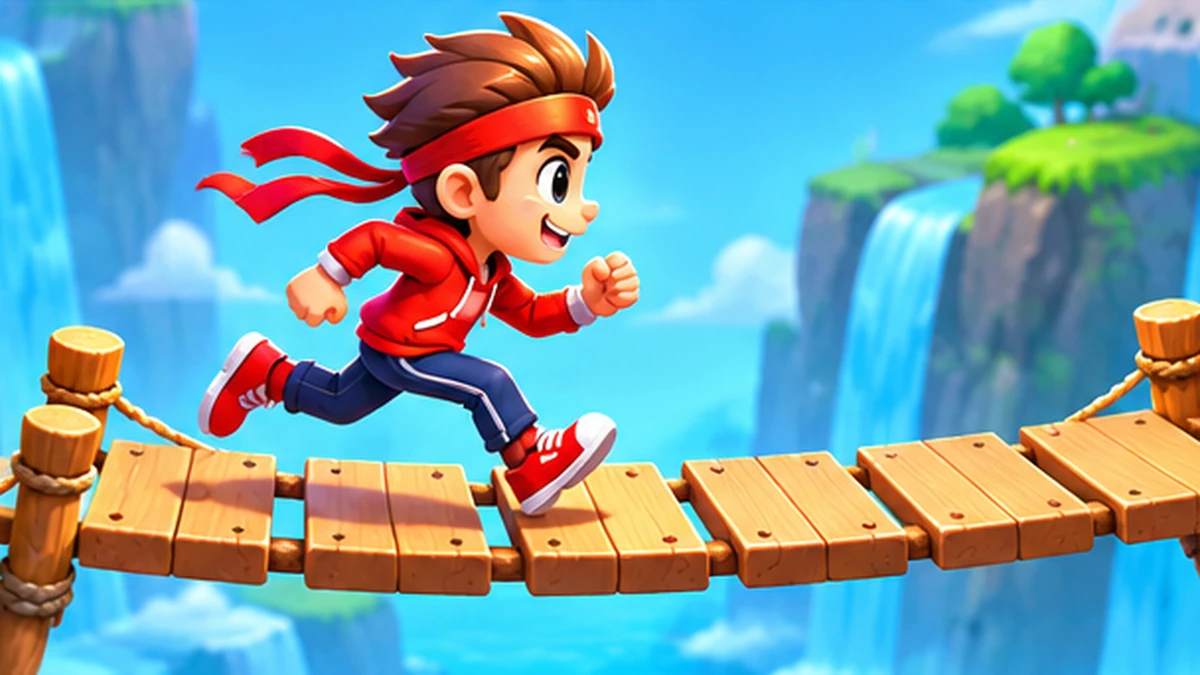
Cross Runner: Master Narrow Bridges, Jump Landings and Obstacle Timing
Improve Cross Runner with practical bridge alignment, hazard timing, landing checks and smarter coin and key collection routes.
Read article ↗
Fill a container to its marked line in Happy Popcorn while controlling how many kernels spill outside.
Play here in the browser.
 Happy Popcorn
Use the container's current level to decide when to stop. The last few kernels need less input than the empty container did, so ease off rather than keeping the opening pace until the very end.
The marked line gives you a target while the popcorn is still moving. Kernels can settle into gaps after you release the input, so a container that looks almost full during a burst can change shape a moment later.
Happy Popcorn asks you to send kernels into a container and bring the fill up to a marked line. The container, line and popcorn source belong to one small control problem: produce enough popcorn without letting too much escape. Begin by observing where newly produced kernels travel. The shape of the receiving space tells you whether a longer burst will settle inside or add pressure to a pile that is already close to spilling.
Treat the marked level as the destination, not an invitation to keep producing after the container looks full. Early in a round, a larger gap below the line can make steady input useful. Nearer the target, smaller additions give you a better chance to read how the kernels settle. A pile can continue shifting after input stops, so allow for that movement before deciding that another burst is needed. The last few additions often deserve more observation than the first ones.
Watch the edges and the opening as well as the rising surface. Kernels that collect awkwardly near a rim can create a spill even when another part of the container remains below the line. If the game shows a loss warning, use it as feedback about the present attempt rather than assuming the same amount of input will fit every container. Judge the visible arrangement and the room left for the popcorn already in motion.
The game includes level-completion and launcher-selection screens, but the central filling decision remains based on the current container. Read any offered choice before applying it and return attention to the actual kernel path when the next round starts. On a phone, keep the fill line and rim visible while using the production control. If an attempt fails, remember whether it was short of the line or lost too much over the edge. Those outcomes call for different corrections. A deliberate sequence of produce, release and observe helps separate them, making another attempt a measured adjustment rather than a longer press made simply because the previous round ended.
A visible line indicates the container's target fill level. Compare the settled popcorn with that line.
Kernels already in motion can continue settling, so the final level may change after input stops.
Watch the rim, opening and rising surface together; an awkward pile at an edge can spill while another area still looks low.
Use the shape and remaining space of the current container rather than repeating one fixed input duration.
Distinguish underfilling from excessive loss over the edge, then adjust the amount or timing of the next production burst.
Found a control that behaves differently? Tell us the game name and your device.
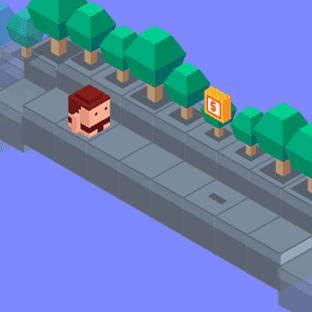
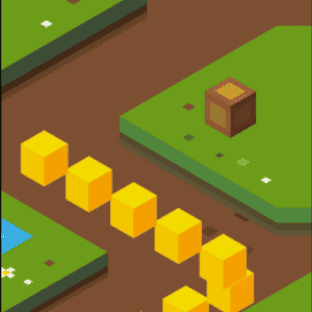




Improve Cross Runner with practical bridge alignment, hazard timing, landing checks and smarter coin and key collection routes.
Read article ↗
Understand camera rotation, layer turns, centers, edges and corners in Cube 3D. Learn reversible moves and plan a standard 3×3 solve step by step.
Read article ↗
Learn the leaf traversal rules, plan flower-planting routes and use Undo to recover from awkward moves in Emoji Puzzle on RobixGame.
Read article ↗
Find exposed matches, clear rising rows and stay below the red line in Pet Merge on RobixGame. Includes a browser check, worked examples and a practi…
Read article ↗