
Cross Runner: Master Narrow Bridges, Jump Landings and Obstacle Timing
Improve Cross Runner with practical bridge alignment, hazard timing, landing checks and smarter coin and key collection routes.
Read article ↗
Grow a stick into a bridge in Stick Monkey and judge the length needed to reach the next platform.
Play here in the browser.
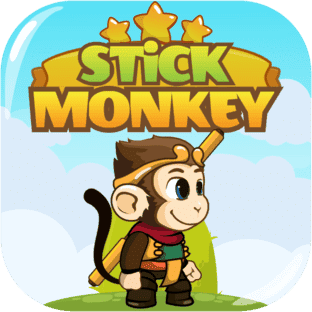 Stick Monkey
Measure against the far platform's usable surface, not just its near edge. A stick can fail by being too long as well as too short, so release for a landing area rather than maximum reach.
Stick Monkey asks you to grow a stick into a bridge between separated platforms. The monkey waits on the current support while you judge the distance to the next one. Decide when to stop extending the stick: more length is not automatically better. The bridge must reach a usable landing surface rather than fall short or extend beyond it. Inspect the receiving platform's full width before beginning the growth.
Use both edges of that support as references. The near edge indicates minimum reach, while the far edge limits the extra length that remains useful. A narrow platform allows less margin than a wide one, even when the gap looks similar. Compare the intended bridge with the landing area, not only the empty distance. This changes the judgement from reaching somewhere across the gap to reaching the right part of a particular platform.
Watch the stick throughout growth and release deliberately. Do not turn every attempt into an identical hold duration, because the spacing can change. A visual estimate gives the release a reason. After the bridge settles and the monkey moves, inspect the result before preparing another crossing. If it misses, distinguish too short from too long; these different errors need different corrections. Avoid a large adjustment when the previous estimate missed by only a small amount.
Changing backgrounds and score information provide context, but the platform edges are the useful references during a crossing. On a phone, use an input position that leaves the stick and landing visible. When restarting, practise one controlled estimate rather than compensating wildly for the last miss. A slightly shorter or longer attempt is informative when it follows a specific observation. The routine is to inspect the support, judge growth and release for its usable surface. Repeat that reasoning rather than memorising the last successful timing. Each new gap asks for another measurement, and preserving a small landing margin is more useful than extending the bridge as far as possible.
Yes. Aim for the receiving surface rather than simply maximising reach.
The near edge sets minimum reach and the far edge limits how much extra length remains useful.
The visible gap and platform width can change between crossings.
Identify whether the bridge was short or overlong, then make a proportionate release correction.
Found a control that behaves differently? Tell us the game name and your device.





Improve Cross Runner with practical bridge alignment, hazard timing, landing checks and smarter coin and key collection routes.
Read article ↗
Understand camera rotation, layer turns, centers, edges and corners in Cube 3D. Learn reversible moves and plan a standard 3×3 solve step by step.
Read article ↗
Learn the leaf traversal rules, plan flower-planting routes and use Undo to recover from awkward moves in Emoji Puzzle on RobixGame.
Read article ↗
Find exposed matches, clear rising rows and stay below the red line in Pet Merge on RobixGame. Includes a browser check, worked examples and a practi…
Read article ↗