
Cross Runner: Master Narrow Bridges, Jump Landings and Obstacle Timing
Improve Cross Runner with practical bridge alignment, hazard timing, landing checks and smarter coin and key collection routes.
Read article ↗
Jungle Boy climbs between tree walls, switching sides to avoid the hazards protruding into the route.
Play here in the browser.
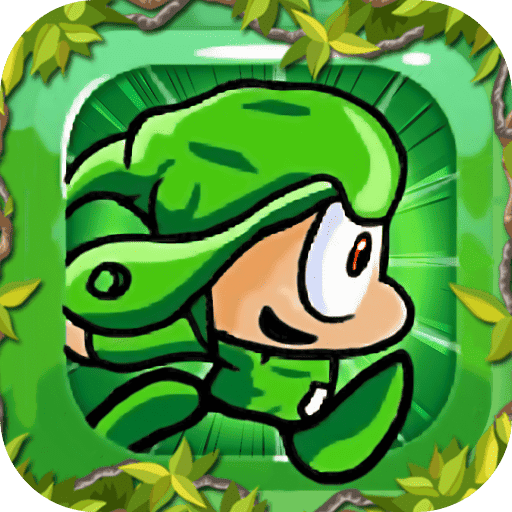 Jungle Boy
Check the destination wall before making a jump. Leaving a dangerous side is only half the decision; the next contact point needs enough clear space for the boy to continue climbing.
Jungle Boy builds its climbing challenge around walls, protruding hazards and a character moving through a vertical jungle route. Changing sides is part of finding clear space, so the next useful movement depends on both walls rather than only the one currently supporting the character. Before switching, inspect the destination side and the height at which the character is likely to reach it. A safe departure does not guarantee a safe arrival.
Read spikes and other obstacles as interruptions to a possible route. The game includes coins and chest imagery as well as the hazards, but collection should not replace the clearance decision. If a reward sits near a protruding obstruction, compare whether the approach leaves enough room for another movement. A clear stretch on the opposite wall can be useful even when it does not pass directly through the nearest collectible.
Use an early side change to learn the movement response. Watch how much vertical travel occurs during the crossing, then use that observation when judging the next opening. Switching again immediately without reading the result can turn one uncertain move into several. Allow yourself to recognise the new position before choosing another action. The aim is a repeatable link between the input, the crossing and the wall space available when the character arrives.
Keep attention slightly ahead of the character rather than following only the previous jump. The jungle artwork contains several decorative shapes, so distinguish the route boundaries and visible hazards from the background before reacting. On a small display, choose a tapping area that leaves both the near obstacle and the intended destination visible. When a climb ends, remember which side lacked clearance and whether the switch began too early or too late. That gives the next attempt a specific timing adjustment. A steady routine of checking both walls, choosing a clear arrival area and observing the crossing makes the vertical course easier to understand than changing sides simply because the current wall is becoming uncomfortable.
A side change needs a usable arrival area as well as a clear departure, so the opposite wall is part of every crossing decision.
The game includes spikes and other protruding obstacles among the jungle surfaces. Read their clearance before changing sides.
Compare the collectible's approach with the space afterward. A clear arrival area remains the immediate requirement.
Observe how the crossing affects height and position, then use that response to judge the next opening.
Identify the side that lacked clearance and whether your crossing began too early or too late for that opening.
Found a control that behaves differently? Tell us the game name and your device.







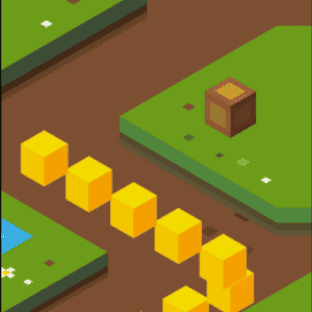





Improve Cross Runner with practical bridge alignment, hazard timing, landing checks and smarter coin and key collection routes.
Read article ↗
Understand camera rotation, layer turns, centers, edges and corners in Cube 3D. Learn reversible moves and plan a standard 3×3 solve step by step.
Read article ↗
Learn the leaf traversal rules, plan flower-planting routes and use Undo to recover from awkward moves in Emoji Puzzle on RobixGame.
Read article ↗
Find exposed matches, clear rising rows and stay below the red line in Pet Merge on RobixGame. Includes a browser check, worked examples and a practi…
Read article ↗